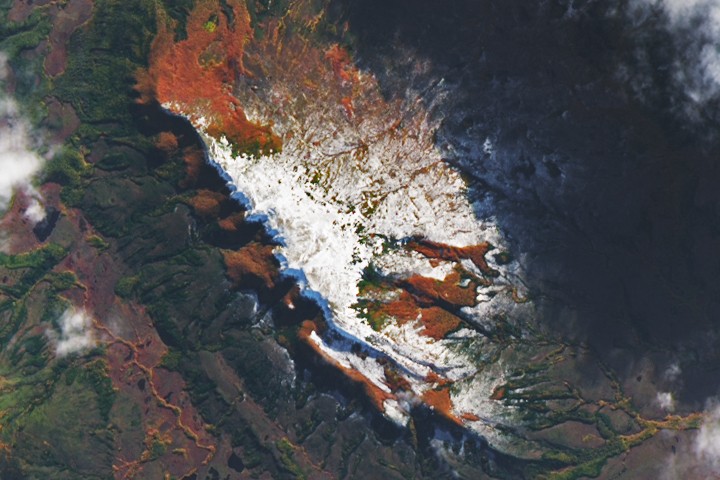
** A stunning Landsat 9 image reveals a rare and vibrant autumnal display in southern Chile’s lenga beech forests, showcasing the continent’s unique biodiversity.
📍 ** Southern Chile, Patagonia
**
The Patagonian landscape, normally dominated by stark white snow, brown plains, and glacial blues, has been transformed by a brief but brilliant spectacle. On April 12, 2026, a Landsat 9 satellite captured a remarkable image of reddish hillsides in the Magallanes region of southern Chile, highlighting the vibrant autumn colors of the temperate deciduous forests. This phenomenon occurs due to the seasonal change in the southern beech trees (Nothofagus), as shorter, colder days trigger a dramatic shift in their foliage.
These ancient forests, containing the southernmost temperate trees on Earth, are primarily home to the lenga beech (Nothofagus pumilio). This adaptable species thrives in challenging conditions, establishing itself across a vast range from approximately 36 degrees south latitude to Tierra del Fuego, a span of roughly 2,000 kilometers. The reddish hues observed in the image are particularly concentrated around elevations of 600 meters (2,000 feet) above sea level, areas where these resilient trees dominate the landscape, often marking the highest tree line in the region.
The fiery colors are most readily visible within iconic locales like Conguillío National Park and Torres del Paine, where the trees also include Nothofagus antarctica, known locally as “ñire” or “Antarctic fire”. The display offers a brief but unforgettable glimpse into Patagonia’s remarkable biodiversity and the natural beauty shaped by the changing seasons.
**
Original Source: Link
** #Patagonia #Chile #AutumnColors #LengaBeech #Nothofagus #Landsat9 #NASA #Biodiversity #SouthernBeech