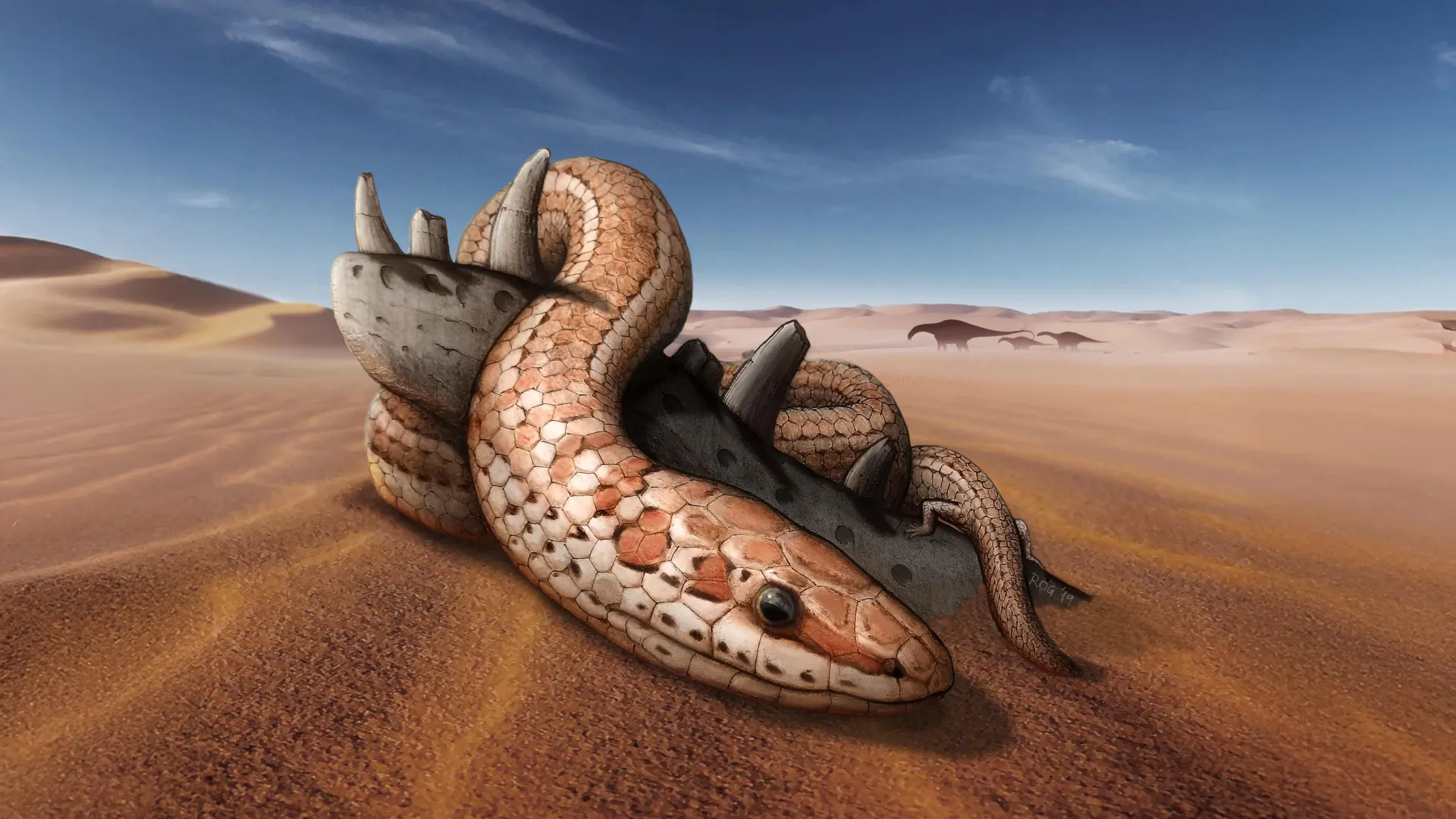
** A remarkably preserved fossil from Argentina is challenging long-held beliefs about snake evolution and providing unprecedented detail on their ancient lineage.
📍 ** Argentina, Northern Patagonia
**
A newly discovered fossil of *Najash rionegrina*, a rear-limbed snake from nearly 100 million years ago unearthed in Northern Patagonia, is shaking up the scientific community's understanding of snake evolution. The fossil's skull retains a key feature – the jugal bone, or cheekbone – that has vanished in modern snakes, providing crucial evidence for a previously unsupported theory. This discovery dramatically shifts the narrative away from the prevailing idea that snakes began as small burrowing creatures, instead suggesting their ancestors were larger, more robust animals with wide mouths, holding onto their hindlimbs for a prolonged period.
Researchers employed cutting-edge micro-computed tomography (micro-CT) scanning to examine the fossil in exquisite detail, revealing intricate pathways of nerves and blood vessels hidden within the rock. This technology allowed them to reconstruct the skull with unprecedented clarity, resolving a longstanding anatomical debate surrounding the jugal bone. The *Najash* fossils offer direct evidence to correct a 160-year-old misunderstanding of this key feature in snakes and their relatives, aligning with the fact that this ancient snake lineage was connected to a limited group of unusual snakes still alive today.
The findings are being hailed as a "revolution" in our knowledge of snake evolution, thanks to the exceptional detail provided by the micro-CT scans. As co-author Michael Caldwell explained, this work provides empirical evidence, not guesswork, correcting a fundamental misunderstanding that has persisted for generations. This research is crucial to understanding the evolution of snake skulls – both ancient and modern.
**
Original Source: Link
** #SnakeEvolution #Paleontology #FossilFind #NajashRionegrina #AncientAnimals #Evolution #Biodiversity #CretaceousPeriod