** Landsat satellites are expanding their observational capabilities, now capturing critical data during nighttime missions to monitor volcanoes, wildfires, and changing ice environments.
📍 ** United States, Yellowstone National Park
**
For over half a century, the Landsat program, operated by the U.S. Geological Survey’s Earth Resources Observation and Science (EROS) Center, has been providing continuous imagery of our planet’s land surfaces. Traditionally, data was collected during midmorning when sunlight was optimal. However, with the addition of Landsat 8 and 9, and a shift in strategy, the satellites are now actively observing the dark side of the Earth, driven by a surge in specialized requests. This enhanced approach is focusing on areas like volcanoes and rapidly changing ice formations.
The key to this expanded capability lies in Landsat’s unique spectral bands. While the familiar blue, green, and red wavelengths are typically less useful during ascending orbits, the thermal infrared bands become powerful tools when observing at twilight or in darkness, allowing scientists to measure snow, ice, and water temperatures. Additionally, the satellite's shortwave infrared (SWIR) bands can detect intense heat sources like active volcanoes and wildfires, while the Thermal Infrared Sensor (TIRS) measures surface temperatures across a wide range of environments.
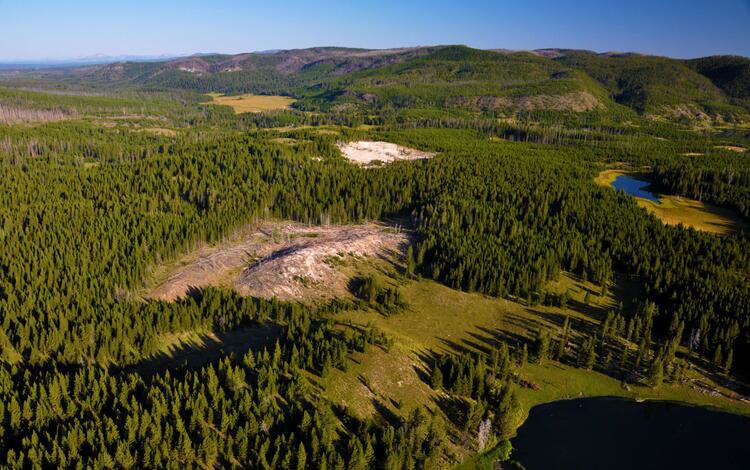
Dr. Christopher Crawford, Landsat Project Scientist at EROS, highlights the increasing demand for nighttime imagery, spurred by critical events. “Nighttime imaging is an all-purpose solution, kind of like Jiffy Baking Mix," Crawford explains, referring to the versatility of the data. Currently, Yellowstone National Park is receiving focused attention, with annual campaigns being implemented to monitor the park's 10,000 thermal features - geysers, hot springs, and steam vents – allowing scientists to track their temperature fluctuations and changes in visibility.
**
Original Source: Link
** #Landsat #EarthObservation #SatelliteImagery #VolcanoMonitoring #WildfireDetection #ClimateChange #YellowstoneNationalPark #USGS