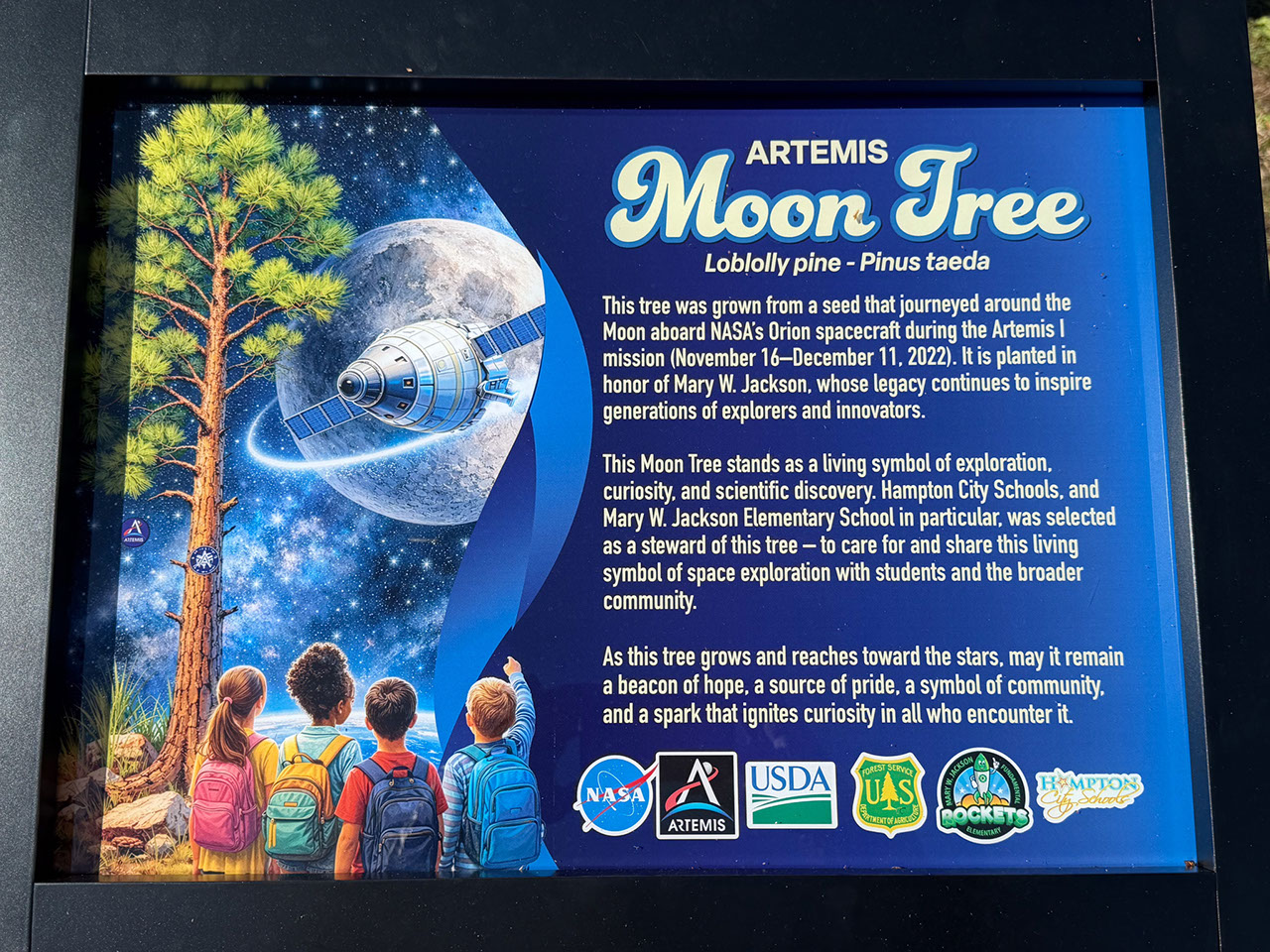
A loblolly pine, once orbiting the Moon, was officially planted as a symbol of exploration and STEM education.
On March 18, 2026, a remarkable event took place at Mary W. Jackson Elementary School in Hampton, Virginia, as students, staff, and NASA personnel celebrated the dedication of an Artemis Moon Tree. The tree, a loblolly pine, had already been planted on November 21st, 2025, by students and staff, marking a significant milestone in the school’s educational program. This event underscored the connection between NASA’s ambitious space exploration efforts and the vital role of STEM education in inspiring the next generation of scientists and engineers.
The tree’s journey is a testament to collaborative efforts and the innovative spirit of NASA. The seed, part of the Artemis I mission in 2022, had orbited the Moon before returning to Earth, where it was carefully nurtured into a sapling by the U.S. Department of Agriculture Forest Service. After arriving in Hampton in late spring 2025, NASA eClips educators at NIA-CISE meticulously cared for the tree until it was ready for planting by third- through fifth-grade students. The planting site was deliberately chosen to honor Mary W. Jackson, NASA’s first Black female engineer, symbolizing the school’s commitment to diversity and inclusion.
The ceremony highlighted the importance of teamwork and small actions. Students, organized into groups like the Earth Excavators and Water Brigade, participated in planting the tree, with fifth-grader Caiden eloquently capturing the essence of the experience. His reflections emphasized the value of dedication, consistency, and contributing one’s part to achieving something significant, mirroring the complexities of NASA missions. The dedication concluded with a ribbon cutting, formally establishing the Artemis Moon Tree as a central feature of the school community and a lasting tribute to exploration and STEM learning.
Source: Official Link
#NASA #Artemis #MoonTree #STEMeducation #MaryWJackson #STEM