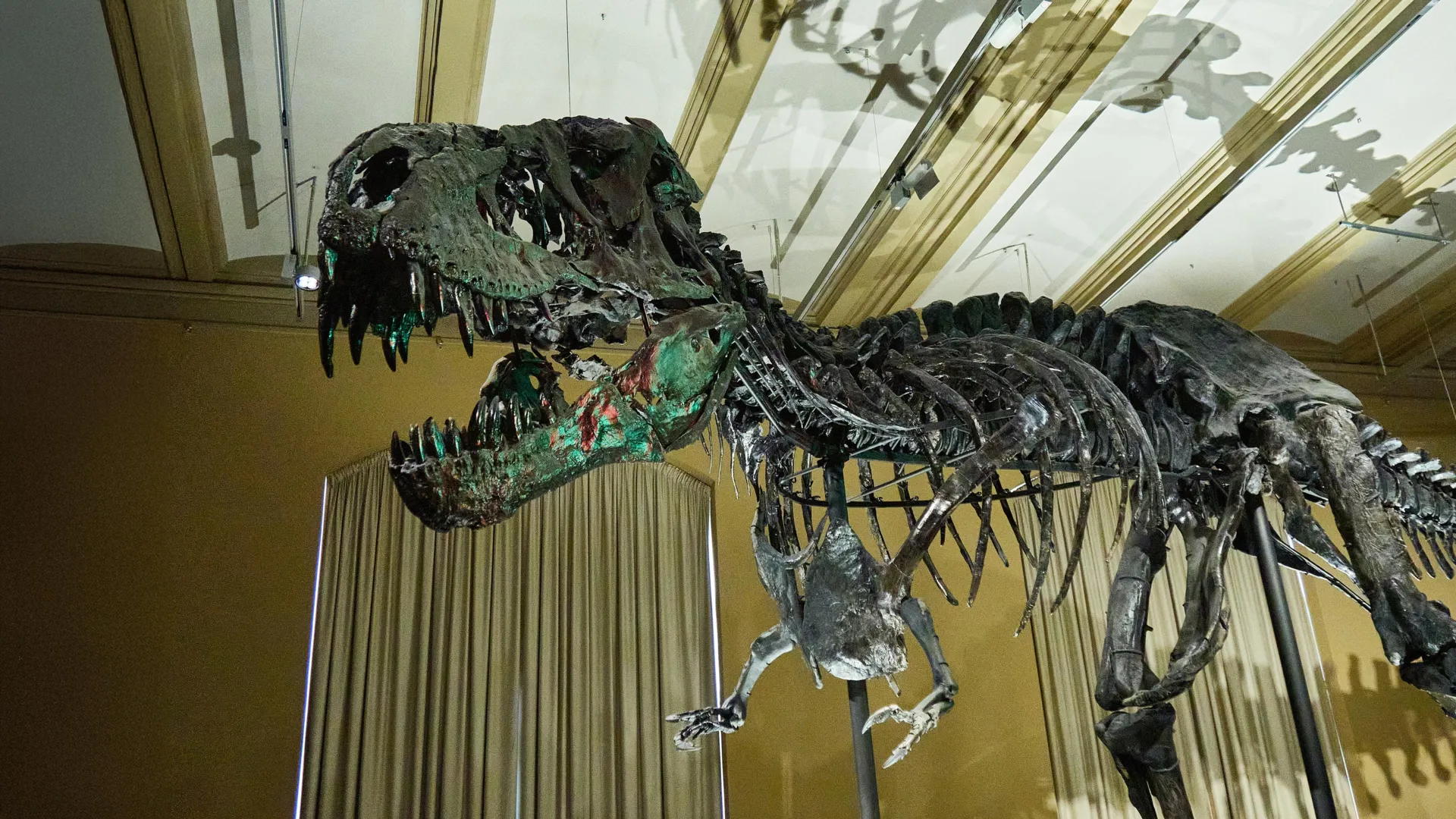
** Scientists are using advanced imaging techniques, originally developed in physics, to reveal hidden details about dinosaur anatomy and behavior.
📍 ** Canada, Saskatchewan (specifically Regina and Royal Saskatchewan Museum)
****
Despite decades of effort, scientists have never recovered dinosaur DNA, shifting the focus of paleontology towards analyzing existing fossil traces. Most research centers on bones and teeth, providing valuable skeletal information but limited insight into the animals’ actual lives. However, the preservation of soft tissues – such as muscles, ligaments, and even skin – offers a far richer understanding of dinosaur appearance, movement, and behavior.
A groundbreaking discovery began with a physics student, now pursuing a PhD, who used particle accelerators to study a *Tyrannosaurus rex* fossil known as Scotty. Housed at the Royal Saskatchewan Museum in Canada, Scotty is the largest *T. rex* ever discovered and remarkably complete. Researchers identified preserved blood vessels within Scotty’s rib, a finding recently published in *Scientific Reports*, stemming from the use of advanced 3D imaging techniques.
The team utilized synchrotron light – a powerful x-ray technology – to visualize the tiny, mineralized vessels, overcoming the challenges of analyzing incredibly dense fossilized bones. The study revealed that Scotty likely lived a difficult life, marked by injuries and potentially combat, as evidenced by the partially healed fracture in one of its ribs. This research demonstrates a powerful intersection of physics and paleontology, offering unprecedented insights into the lives of these magnificent prehistoric creatures.
**
Original Source: Link
** #DinosaurDiscovery #Paleontology #FossilResearch #Synchrotron #TyrannosaurusRex #ScottyRex #ScientificReports #AncientLife