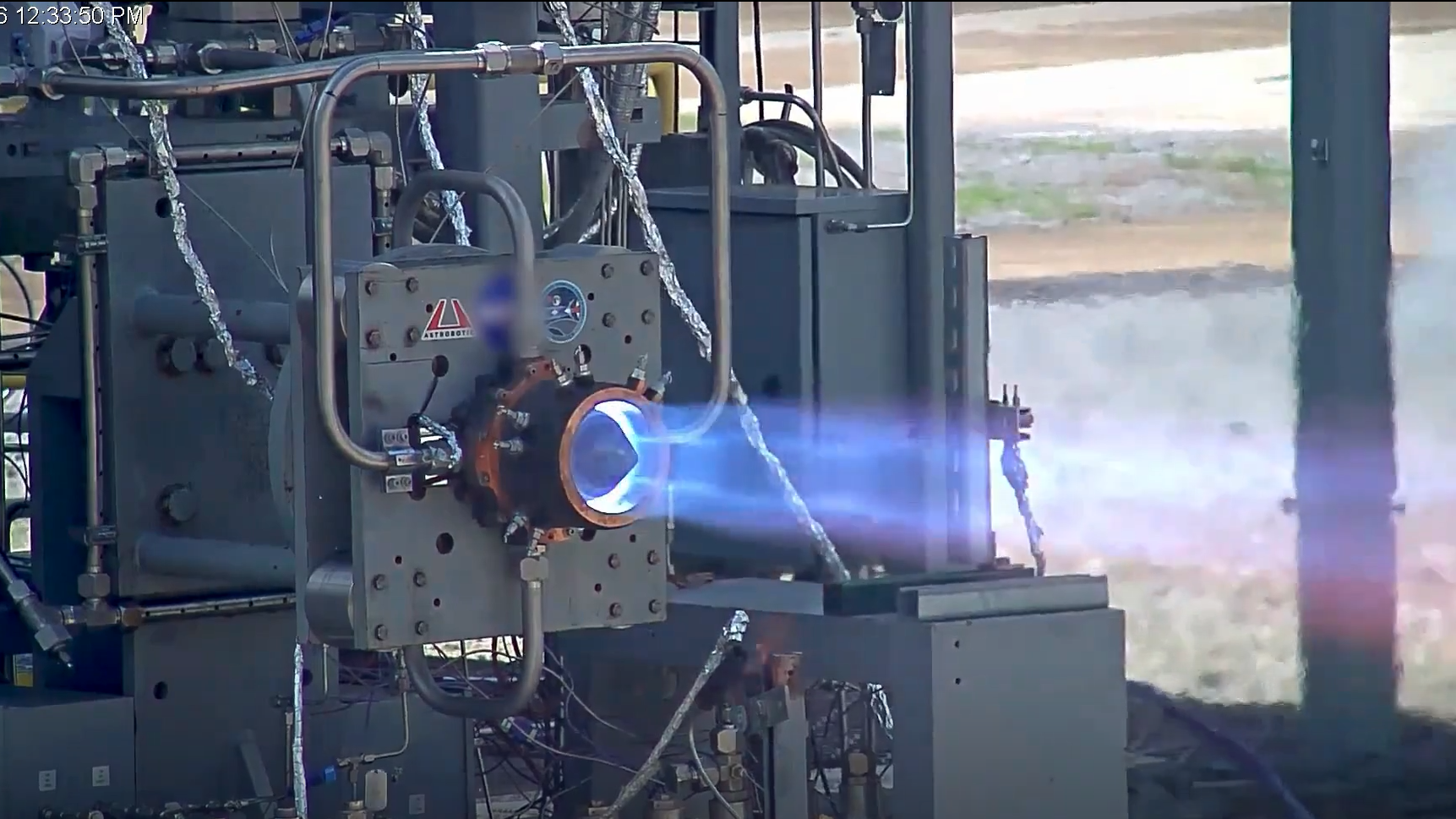
** Astrobotic’s Chakram engine successfully completed hot-fire tests, demonstrating a significant step towards revolutionizing spacecraft propulsion.
📍 ** Pittsburgh, USA / Huntsville, Alabama (Testing Location)
**
Astrobotic, a Pittsburgh-based space technology company, has achieved a major breakthrough with its rotating detonation rocket engine (RDRE) prototype, Chakram. Recent hot-fire tests at NASA’s Marshall Space Flight Center in Huntsville, Alabama, have proven the engine’s capabilities, marking a critical step toward its deployment in future space missions. Rotating detonation engines represent a fundamentally different approach to rocket propulsion than conventional designs. Instead of a steady burn, they utilize a continuous, circular detonation wave for greater efficiency and thrust.
The tests, which involved two RDRE prototypes, accumulated over 470 seconds of firing time, including a remarkable 300-second continuous burn – a record for sustained RDRE operation. Each engine delivered more than 4,000 pounds of thrust and reached thermal steady state, confirming the engine's stability and durability. This data directly addresses a key concern surrounding RDRE technology: its reliability for long-duration spaceflight.
Astrobotic anticipates that this technology could significantly benefit missions around the moon, including lunar landers and orbital transfer vehicles, as well as expanding operations within cislunar space. “Chakram more than exceeded our expectations,” said Bryant Avalos, Astrobotic’s Principal Investigator. The successful testing lays the groundwork for advancements in spacecraft propulsion, potentially reducing fuel consumption and shrinking engine size – crucial factors for deep space exploration.
**
Original Source: Link
** #SpaceExploration #RocketEngine #RDRE #Astrobotic #NASA #Cislunar #SpaceTech #Propulsion