A daring attempt by NASA’s Curiosity rover resulted in a remarkable rock discovery, though not without some challenges.
📍 Mars
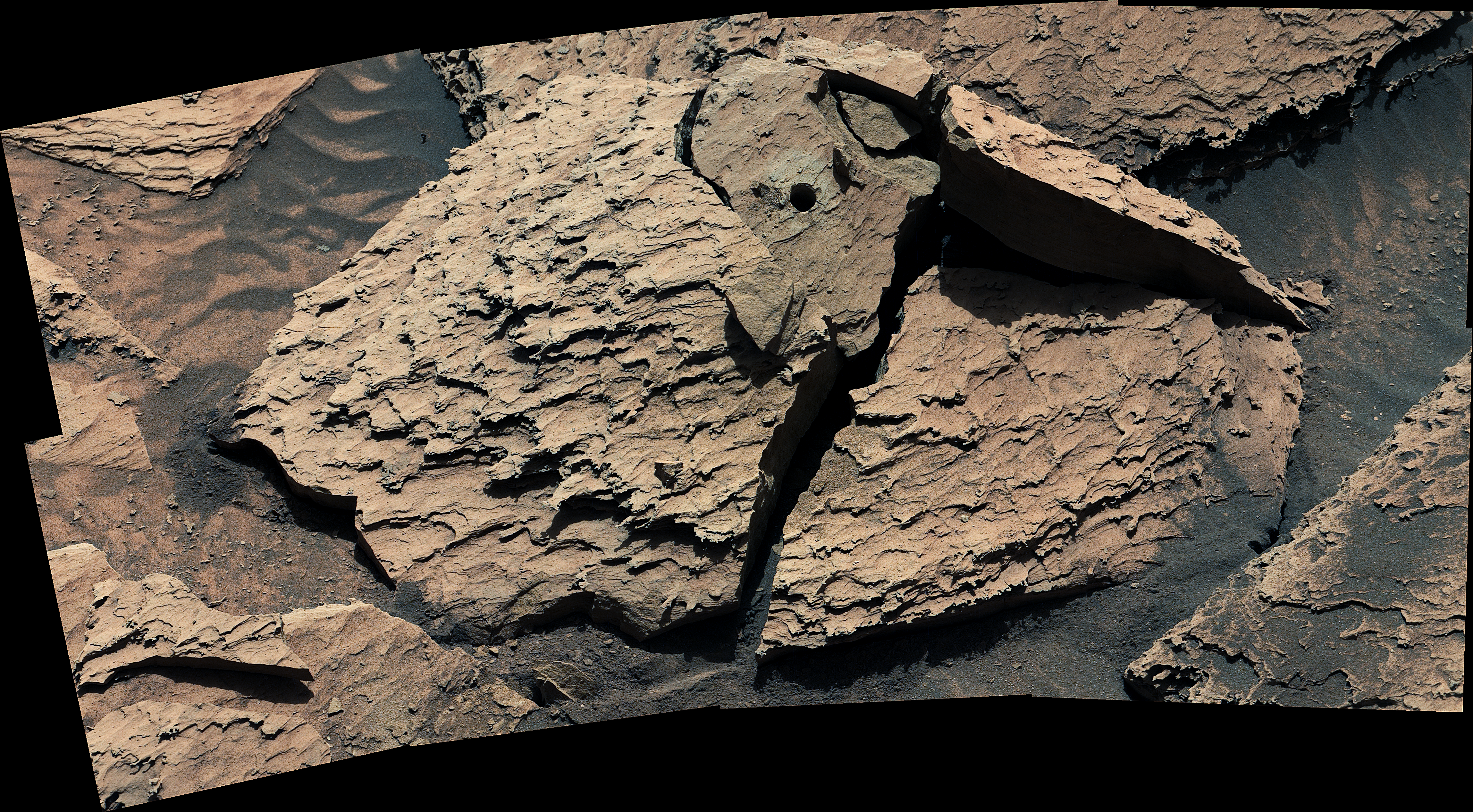
The Curiosity Mars rover achieved a significant milestone on April 25, 2026, when it successfully drilled a sample from an intriguing Martian rock. What followed was a painstaking process as the rover’s robotic arm struggled to dislodge the sample. Engineers worked diligently for several days, maneuvering the arm and employing vibrations to try and free the rock from its subterranean hold. Finally, on May 1st, the rock yielded, but unfortunately, it shattered into pieces upon detachment.
A close-up image of the broken rock, dubbed “Atacama,” was captured by Curiosity’s Mast Camera on May 6th, offering scientists a detailed view of the Martian material. The rock is estimated to be approximately 1.5 feet in diameter at its base and 6 inches thick, weighing around 28.6 pounds on Earth – roughly a third of that on the Red Planet. The circular hole created by the drill is clearly visible, providing a direct link to the sample’s origin.
The discovery of “Atacama” adds another intriguing layer to Curiosity’s mission, offering a unique opportunity to study the geological composition of Mars and potentially unlock secrets about the planet’s past. Scientists are eagerly analyzing the fragments, hoping to glean information about the rock’s age, formation, and the processes that shaped the Martian landscape.
Original Source: Link
#MarsExploration #CuriosityRover #NASA #SpaceRocks #RedPlanet #Geology #Astrobiology #MarsScience