New guidelines ensure reliable quality assessment for optical satellite data acquisitions.
📍 United States, Washington D.C.
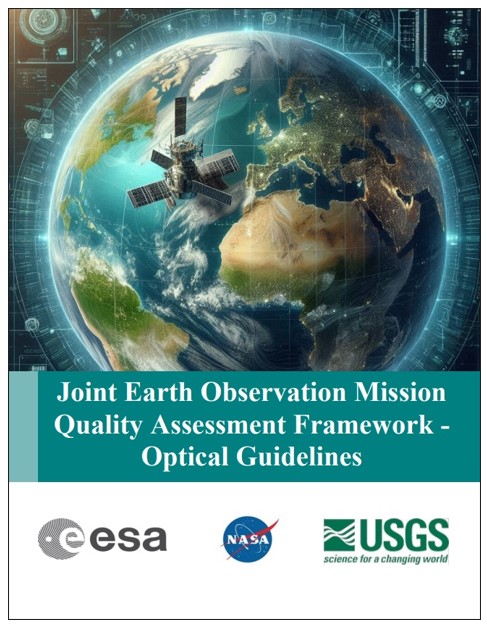
On April 26, 2026, NASA, in collaboration with the European Space Agency (ESA) and the U.S. Geological Survey (USGS), released the Joint Earth Observation Mission Quality Assessment Framework – Optical Guidelines, a significant development in the rapidly expanding field of commercial Earth observation data. This document provides detailed specifications for evaluating the quality of optical sensors used in missions, directly supporting the implementation of a broader Earth observation mission quality assessment framework. The guidelines are designed to bolster confidence within the user community regarding data acquired through the Commercial Satellite Data Acquisition (CSDA) program.
The framework’s creation stems from a growing trend: the increasing number of commercial Earth observation satellite systems due to lower launch costs and expanding applications of EO data. Recognizing this shift, NASA, ESA, and USGS developed a standardized methodology for assessing data quality, encompassing documentation review, verification processes, and common radiometric and geometric calibration/validation practices. This approach, championed by CSDA Project Manager Dana Ostrenga, aims to ensure commercial data acquisitions align with stated mission performance, ultimately empowering users to confidently integrate these datasets into their workflows.
Looking ahead, the agencies plan to continuously update the guidelines to reflect market evolution and advancements in Earth sciences and EO data applications. The Joint EO Mission Quality Assessment Framework is intended to facilitate mission selection, data integration, and the trusted use of commercial EO data, offering a transparent and repeatable process for evaluating the quality of data from commercial satellite providers.
Original Source: Link
#EarthObservation #EOData #SatelliteData #CSDA #NASA #ESA #USGS #DataQuality