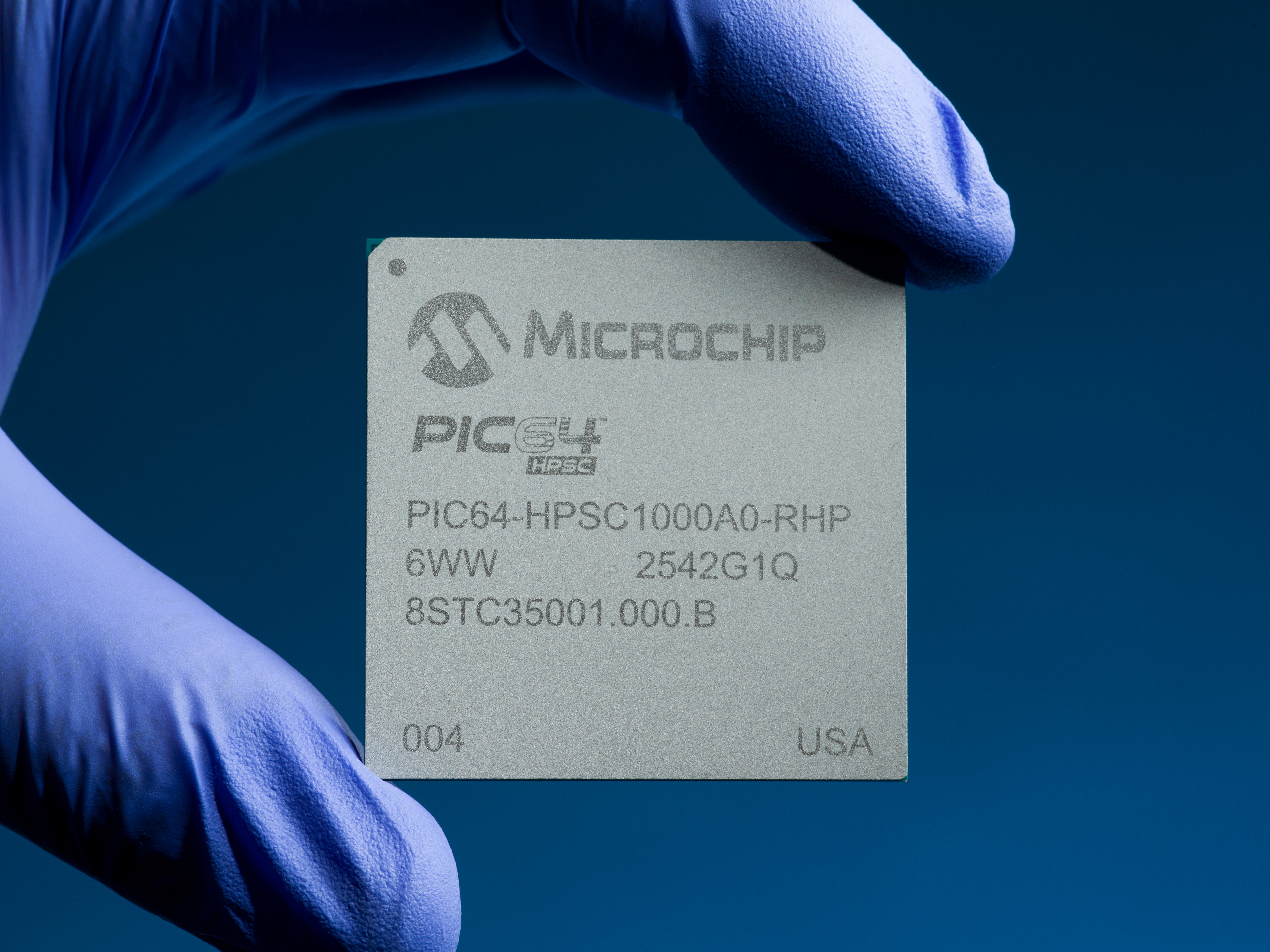
NASA and Microchip are pioneering a revolutionary system-on-chip to dramatically enhance space mission capabilities.
📍 United States
For decades, NASA has been at the forefront of developing robust computer processors for spacecraft, a lineage begun with the groundbreaking Apollo Guidance Computers. These processors, meticulously engineered to be radiation-hardened, have reliably guided missions to the Moon and powered ambitious projects like the Mars rovers, demonstrating incredible resilience in extreme environments. However, as NASA’s ambitions for exploration expand – including longer missions to Mars and the eventual return to the Moon – the demands on onboard computing power have grown exponentially. The need for greater autonomy, increased processing speed, and enhanced resilience became increasingly critical.
To address this challenge, NASA partnered with Microchip Technology Inc. to create the High-Performance Spaceflight Computing system-on-chip. This innovative technology boasts over 100 times the computing capability of current space processors, significantly reducing system costs and power consumption through integrated computing and networking. Its adaptable architecture, featuring scalable designs with power-down capabilities, is ideally suited for both geosynchronous, deep-space missions and the unique requirements of the commercial space sector.
The resulting technology unlocks unparalleled possibilities for spacecraft, allowing them to process massive datasets in real-time, autonomously control complex systems like rovers, and even safeguard sensitive operations with integrated security controls. This public-private partnership, fueled by a broad ecosystem of academic and industry partners, underscores the United States’ commitment to maintaining leadership in the next era of space exploration, promising a “Golden Age of Exploration” powered by advanced computing.
Original Source: Link
SpaceTech NASA Microchip SpaceExploration SystemOnChip AutonomousSystems Innovation SpaceComputing