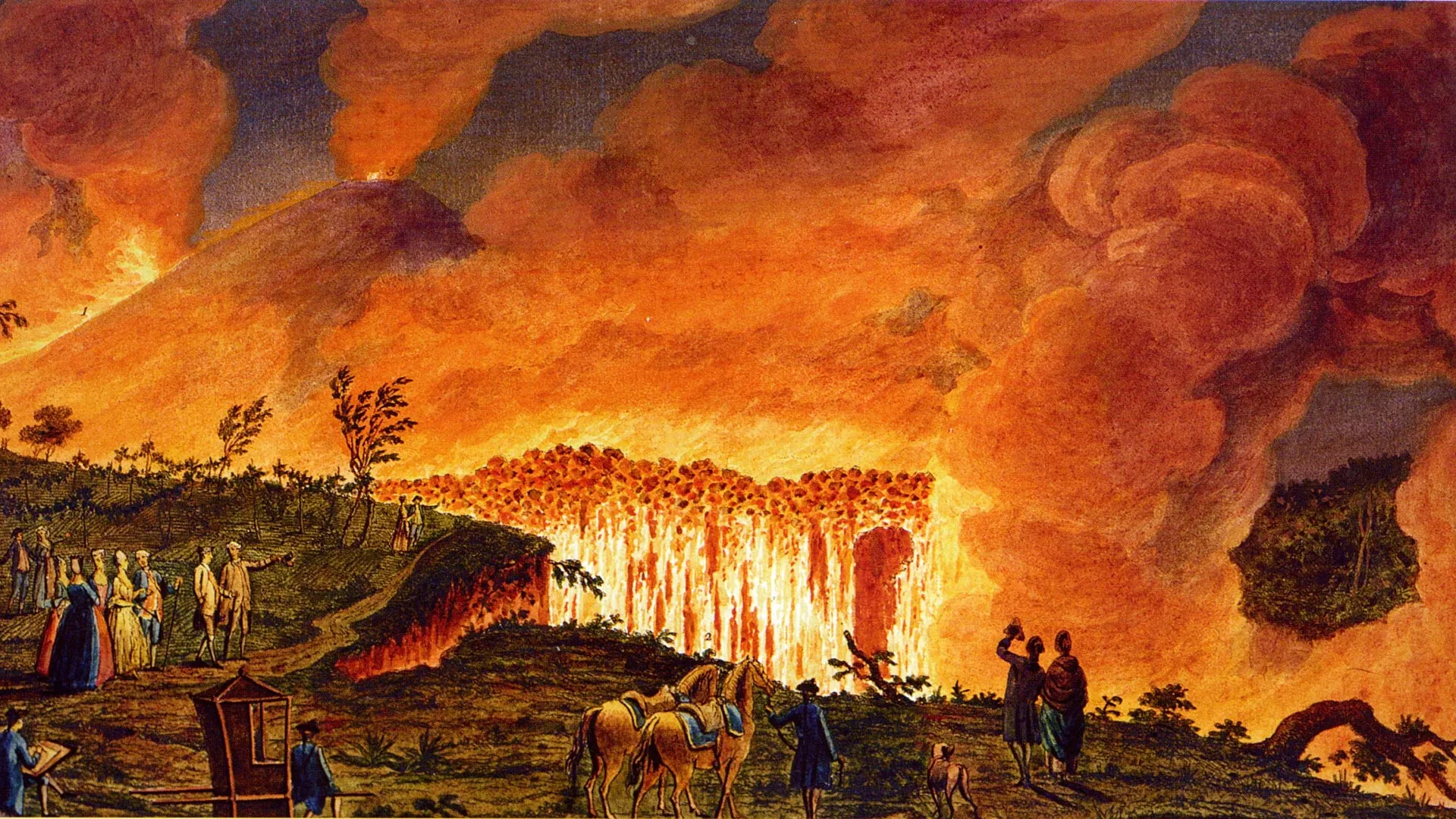
** A centuries-old dream of capturing a volcanic eruption has roared back to life thanks to the ingenious fusion of 18th-century artistry and 21st-century engineering.
📍 ** Melbourne, Australia
**
For over two and a half centuries, the vision of Sir William Hamilton, a British ambassador captivated by the fiery power of Vesuvius, lay dormant. His initial concept, sketched in 1775, sought to translate the raw spectacle of a volcanic eruption into a tangible, moving artwork – a blend of scientific observation and artistic expression. Inspired by Pietro Fabris’ dramatic watercolor, the device was intended to use a complex system of lights and gears to realistically simulate the flowing lava and explosive bursts that defined Vesuvius’s devastating beauty. Though the original design remained largely unbuilt, the detailed sketch preserved in the Bordeaux Municipal Library acted as the crucial blueprint for a remarkable revival.
A team of University of Melbourne engineering students, harnessing the power of modern technology, successfully resurrected Hamilton’s ambitious project. Master’s students Xinyu (Jasmine) Xu and Yuji (Andy) Zeng, alongside guidance from Dr. Richard Gillespie and research engineer Andrew Kogios, meticulously recreated the mechanism. Employing laser-cut timber, acrylic, programmable LED lighting, and sophisticated electronic control systems, they transformed Hamilton’s clockwork design into a dynamic demonstration of engineering and artistic ingenuity.
Now, the finished device stands as a centerpiece of “The Grand Tour” exhibition at the University’s Baillieu Library, offering a truly unique blend of historical fascination and cutting-edge technology. The project isn’t just a display; it's a testament to the enduring appeal of scientific curiosity, the power of collaborative learning, and the surprisingly relevant inspiration found in the visions of an 18th-century volcanologist.
**
Original Source: Link
** #Vesuvius #Volcano #MechanicalArt #Engineering #Innovation #STEM #UniversityOfMelbourne #HistoricalEngineering