** New AI technology is dramatically enhancing images from the Vera Rubin Observatory, promising unprecedented astronomical insights.
📍 ** Chile, California (USA), Japan
**
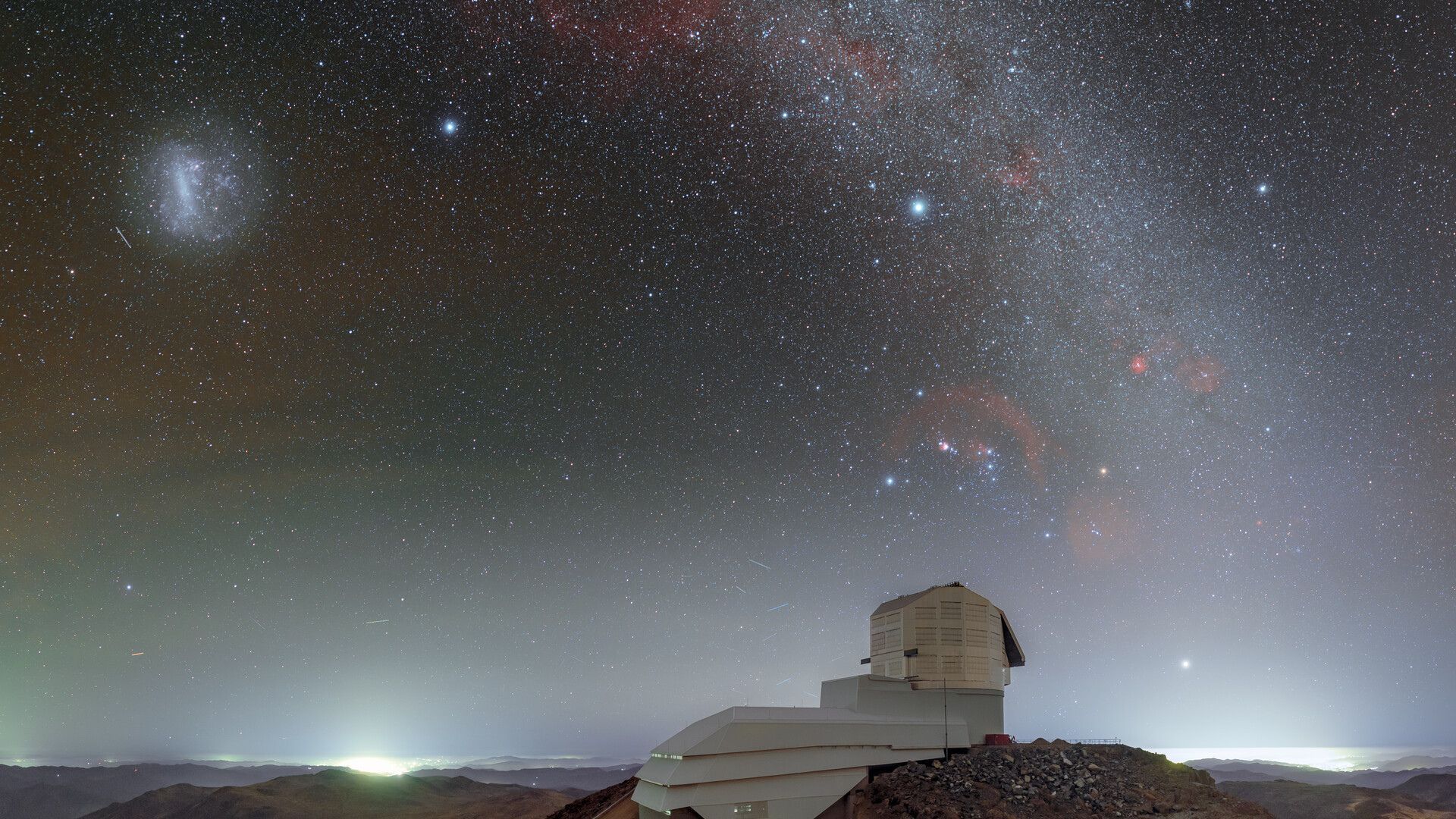
The Vera C. Rubin Observatory, a state-of-the-art astronomy facility located atop Cerro Pachón in Chile’s Atacama Desert, began its ambitious task of scanning the entire sky every three nights, aiming to create a comprehensive 10-year timelapse of celestial movement. This new observatory, named after the pioneering astronomer Vera Rubin, is already producing a deluge of data, and a key advancement is utilizing artificial intelligence to refine the image quality. The observatory's location in the world's driest region and consistently clear skies allow for optimal observation, but the Earth's atmosphere introduces significant distortions to the light reaching the telescope's detectors.
A groundbreaking AI algorithm, dubbed “Neo,” developed by researchers at the University of California, Santa Cruz (UCSC), is tackling this distortion. Trained on data from both the Subaru Telescope in Japan and the Hubble Space Telescope, Neo learns to "fill in the gaps" and sharpen the images, effectively mimicking the clarity of a space-based telescope. This innovative approach significantly reduces blurring caused by atmospheric turbulence, a persistent challenge for ground-based observatories.
The results of Neo’s application are remarkable. Researchers report that the model increases the accuracy of measured morphological parameters by as much as 10 times, revealing previously obscured details in galaxy shapes and star counts. This means astronomers can now observe a vastly greater quantity of individual stars and identify the precise forms of distant galaxies with unprecedented precision, unlocking new possibilities for understanding the universe.
**
Original Source: Link
** #VeraRubinObservatory #SpaceExploration #Astronomy #AI #JamesWebbSpaceTelescope #DarkMatter #Chile #Nebula