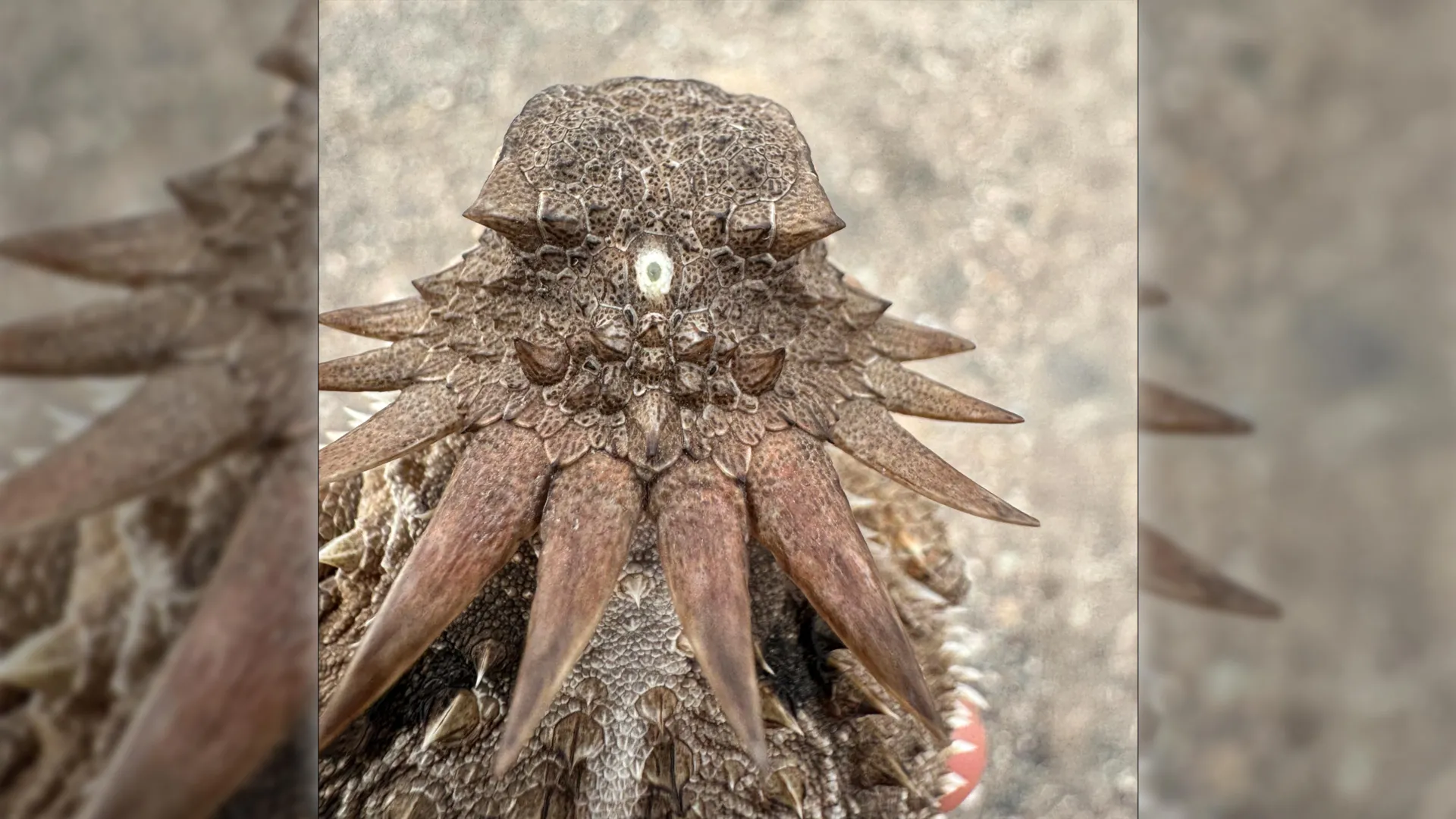
Scientists have uncovered a stunning evolutionary link, revealing that all vertebrate eyes trace their origins back to a single, cyclops-like eye found in our distant ancestors.
📍 Lund, Sweden & Sussex, UK
New research from Lund University and the University of Sussex is shaking up our understanding of how vision evolved. Scientists have discovered that all vertebrates can be traced back to a worm-like creature that lived approximately 600 million years ago. This ancient animal possessed a single eye, or “median eye,” positioned high on its head, resembling a tiny cyclops. Remarkably, vestiges of this original eye remain in our brains today as the pineal gland, a small structure playing a role in regulating sleep and mood. The surprising findings challenge previous assumptions about the gradual development of the eye and brain.
The worm-like ancestor was a stationary filter feeder, initially possessing two eyes that eventually disappeared as it adapted to a more sedentary lifestyle. Despite losing its paired eyes, the creature retained a cluster of light-sensitive cells in the center of its head. Over millions of years, this cluster evolved into a simple, single eye capable of detecting light and darkness, providing crucial orientation for the animal. A subsequent return to a swimming lifestyle spurred further evolution, leading to the development of more sophisticated vision and, eventually, paired eyes.
This unique evolutionary pathway explains why vertebrate eyes differ so dramatically from those of other animals like insects and squid. Vertebrate eyes developed from the brain’s extension, the retina, while insect and squid eyes arose from tissues on the side of their heads. Researchers describe this process as a remarkable “detour,” suggesting vertebrate vision wasn’t built directly from earlier eye structures, but rather “rebuilt” from this ancient, single median eye.
Original Source: Link
#Evolution #VertebrateEyes #PinealGland #AncientHistory #SensoryBiology #Neuroscience #AnimalEvolution #GeneticResearch