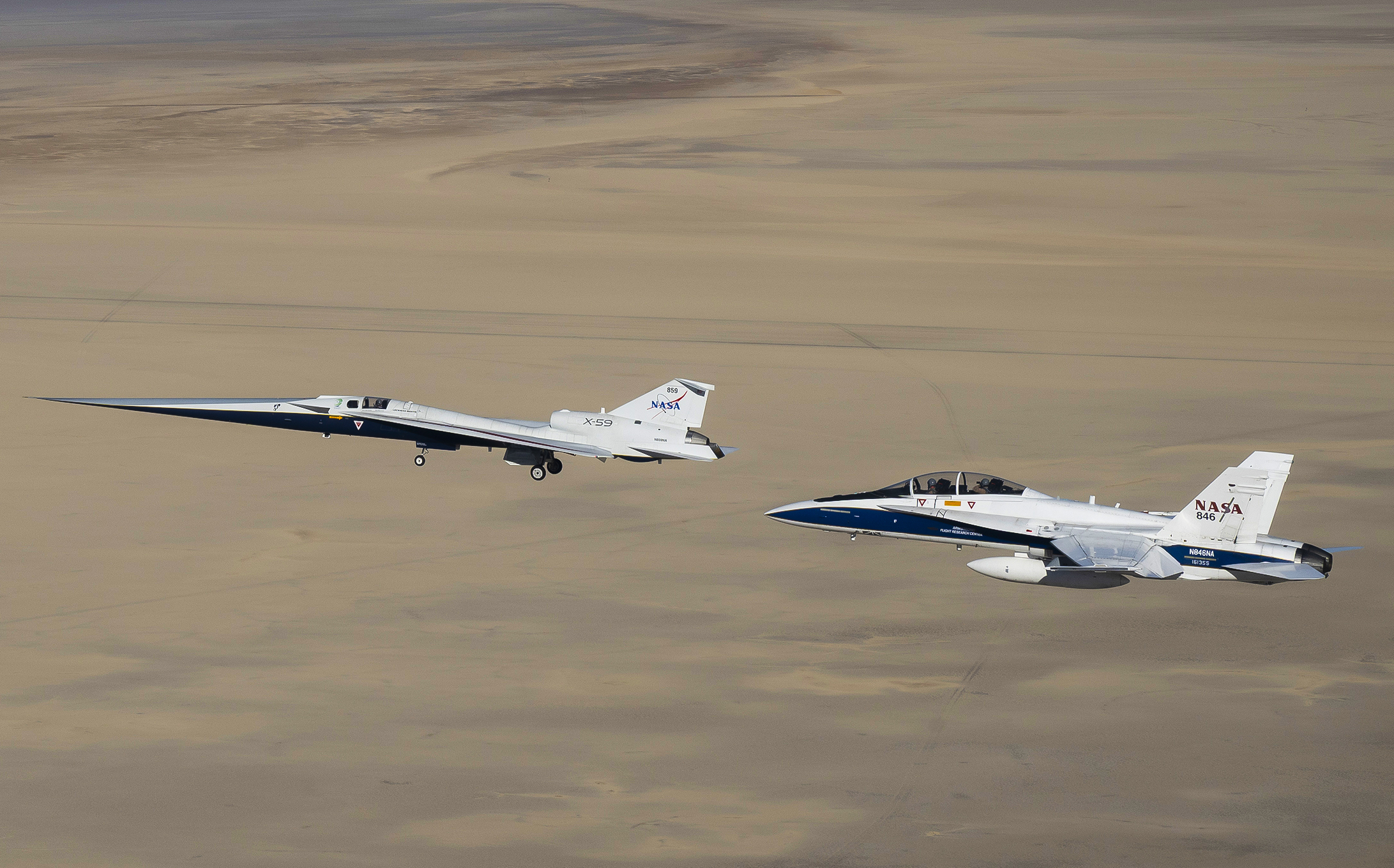
NASA’s Armstrong Flight Research Center continues its legacy of pioneering flight research with a bolstered fleet and crucial support for global scientific missions.
📍 United States, Edwards, California
NASA’s Armstrong Flight Research Center in Edwards, California, is significantly expanding its operations, adding a diverse range of aircraft to its already impressive collection. This includes two F-15 supersonic jets, a Pilatus PC-12 utility plane, and a T-34 turboprop trainer, all intended to support the agency's continued advancement of aerospace research and exploration. The center's history is legendary, encompassing everything from the iconic 747 Shuttle Carrier Aircraft and the groundbreaking X-15 rocket-powered airplane to recently repurposed fighter jets like the F/A-18. As Darren Cole, capabilities manager, emphasizes, it’s the team’s unique expertise in handling these complex aircraft and their extensive knowledge base that truly sets Armstrong apart.
Beyond simply flying aircraft, the center plays a vital role in enabling worldwide airborne science missions. Scientists from NASA, other government agencies, industry, and academia utilize Armstrong’s capabilities to collect critical data, including measurements of air pollution, glacier melt trends, and wildland fire mapping. This work is often conducted aboard flying laboratories like the NASA ER-2, where scientists can manage experiments in real-time, aided by the center’s skilled pilots and airborne science team. Matt Berry, branch chief, highlights the team's "agility" – their ability to collaborate with scientists, transport equipment, and fly researchers to precisely needed locations.
The center’s location on Rogers Dry Lake, a 44-square-mile area, is integral to its success, having hosted everything from space shuttle landings to emergency test flight recoveries. This historic site continues to serve as a key location for Armstrong’s test missions, dating back to the very first attempt to break the sound barrier with the Bell X-1 in 1946. This legacy of innovation and commitment to pushing the boundaries of flight research remains at the heart of the Armstrong Flight Research Center today.
Original Source: Link
NASA Aerospace FlightResearch Science Innovation EdwardsCalifornia ArmstrongFlightResearchCenter AirborneScience