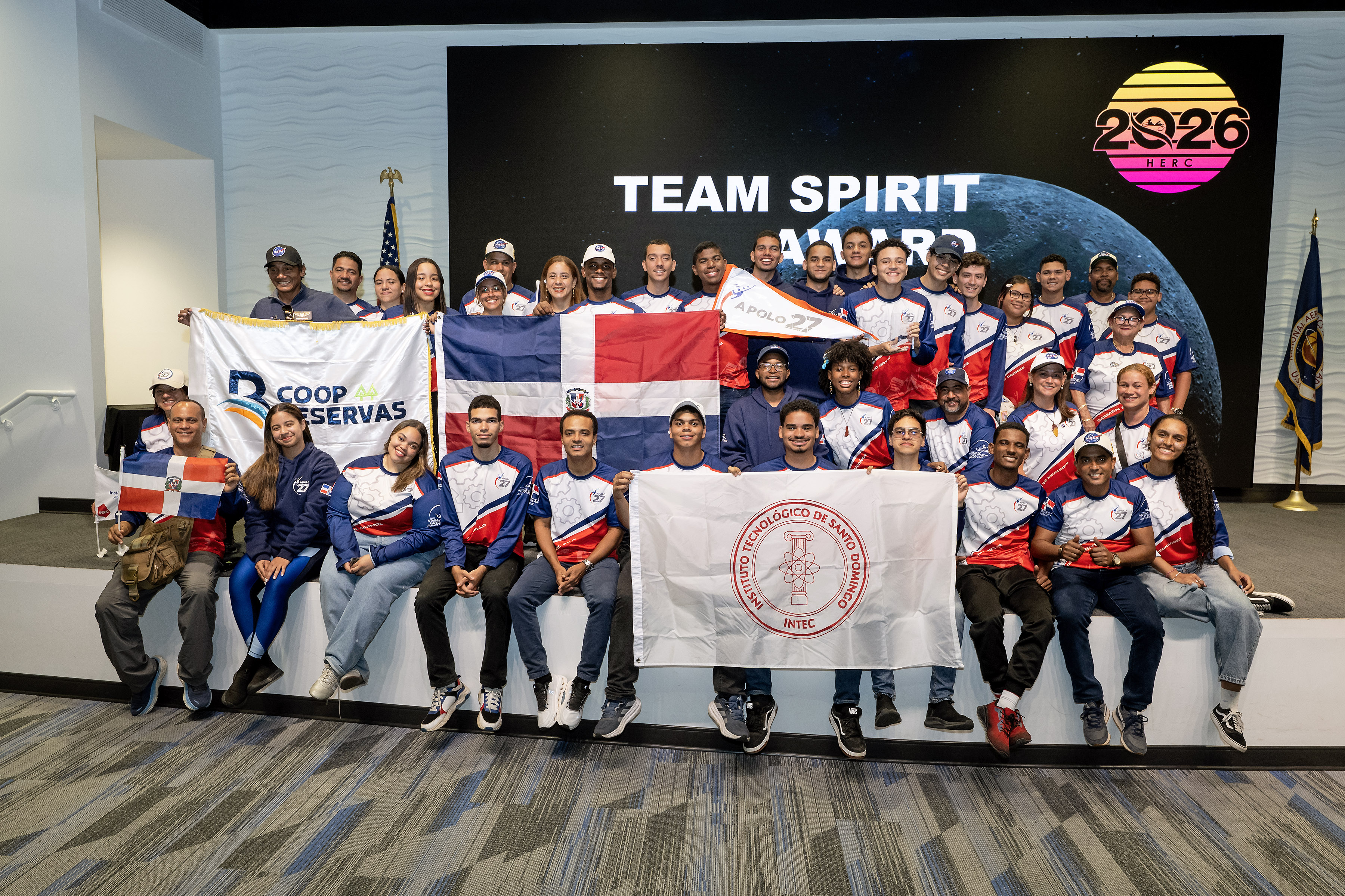
** NASA’s annual Human Exploration Rover Challenge concluded with teams from around the globe showcasing their innovative lunar rover designs.
📍 ** Huntsville, Alabama, USA & Global (Teams from around the world)
**
The 32nd annual Human Exploration Rover Challenge wrapped up April 10-11 at the U.S. Space & Rocket Center in Huntsville, Alabama, marking the culmination of nine months of intense design and testing by student teams. Teams from across the globe competed to build and operate lunar rovers, both human-powered and remotely controlled, tackling a demanding half-mile obstacle course and completing complex mission tasks. This year's challenge saw over 500 students from 42 teams representing 28 colleges and universities, 13 high schools, and one middle school across 18 U.S. states, Puerto Rico, and beyond.
The competition, judged by NASA engineers, assessed teams based on their rover’s navigation skills, mission task completion, and adherence to safety and design standards. The event highlighted the importance of hands-on learning and innovation in preparing the next generation of space explorers. “This challenge gives students a hands-on opportunity to think like engineers and problem-solvers, applying real-world design principles to complex exploration scenarios,” stated Vemitra Alexander, leading the challenge for NASA’s Office of STEM Engagement.
Ultimately, Parish Episcopal School (Texas) took first place in the human-powered high school division, while the University of Central Missouri (Missouri) secured the college/university title. In the remote-control category, Gould Academy (Maine) dominated the middle and high school competition, and The University of Alabama in Huntsville (Alabama) won the college/university remote-control challenge.
**
Original Source: Link
** #NASA #RoverChallenge #SpaceExploration #STEM #Engineering #LunarRover #Robotics #SpaceTech #Innovation